

What are 3D Printing filaments?
3D printing filament are thermoplastic materials for fused deposition modelling (FDM) 3D printers. There are many types of filament available with different properties, requiring different temperatures to print. Filaments are available in two standard diameters; 1.75 and 2.85 mm depending on the manufacturer of the printer.
These are a few of the filaments Psyber-Tech has capability in printing:
General purpose filaments
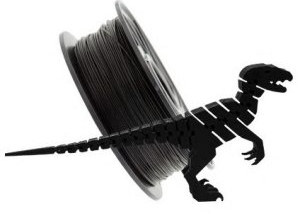
ABS Filament
Acrylonitrile butadiene styrene (ABS) is a low cost material, great for printing tough and durable parts that can withstand high temperatures.
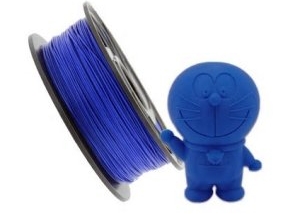
PLA Filament
Polylactic acid (PLA) is the go-to material for most users due to its ease-of-use, dimensional accuracy, and low cost.
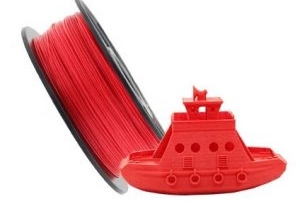
PETG Filament
Polyethylene terephthalate glycol modified (PETG) filaments are known for their ease of printability, smooth surface finish, and water resistance.
Engineering filaments
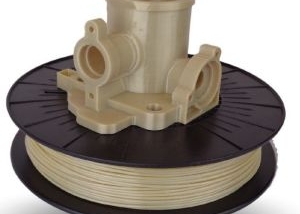
PEI Filament
Polyether Imide (PEI) is an amorphous, high-performance polymer that combines excellent thermal properties, exceptional dimensional stability, inherent flame retardancy, and good chemical resistance
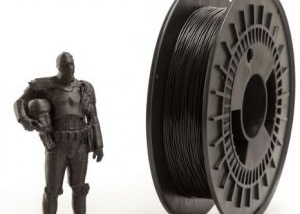
PA Filament
Polyamide (PA) also known as Nylon is a tough and semi-flexible material that offers high impact and abrasion resistance. It is an ideal choice for printing durable parts.
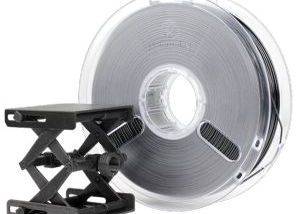
PC Filament
Polycarbonate (PC) is known for its strength and durability. It has very high heat and impact resistance making it an ideal choice for tough environments.
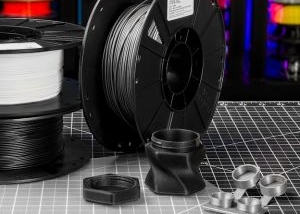
PP Filament
Polypropylene (PP) is great for high-cycle, low strength applications due to its fatigue resistance, semi-flexible, and lightweight characteristics.
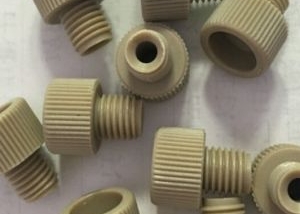
PEEK Filament
Polyether ether ketone (PEEK) is an organic thermoplastic polymer that has an intriguing combination of mechanical properties, including high-temperature performance, mechanical strength, and excellent chemical resistance.
ASA Filament
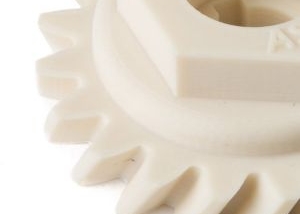
Acrylonitrile styrene acrylate (ASA) s known for its high impact and good chemical resistance. It can handle high temperatures (softening at 105 °C) and great dimensional stability.
Flexible filaments
TPE Filament
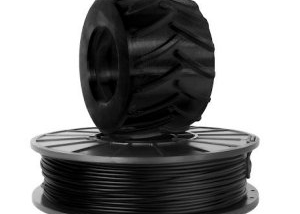
Thermoplastic elastomers (TPE) are polymers that exhibit elasticity similar to that of a cross-linked rubber. The degree of elasticity in the material depends on the type of TPE and the chemical structure of the grade. In addition, this grade of elastomers come with the processing advantages of thermoplastics, which is good for 3D printing!
TPU Filament
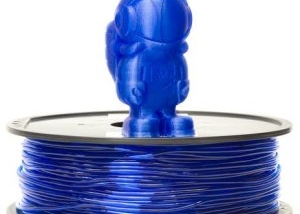
Thermoplastic polyurethane (TPU), is the most common type of TPE used in 3D printing. Compared to other flexible filaments, it exhibits greater rigidity, allowing it to extrude more easily. It also has decent strength and high durability.
TPC Filament
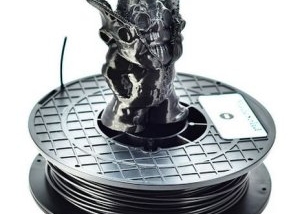
Thermoplastic copolyester (TPC) are copolyether esters with alternating, random-length sequences of either long-chain or short-chain glycols. They have both hard and soft segments. Hard segments are typically short-chain ester units whereas soft segments are usually aliphatic polyethers and polyester glycols.

TPA Filament
Thermoplastic polyamide (TPA) is a chemical co-polymer of TPE and highly flexible nylon. The result is a combination of a smooth, lustrous texture, coming from nylon, and the flexibility of TPE.
Soluble filaments
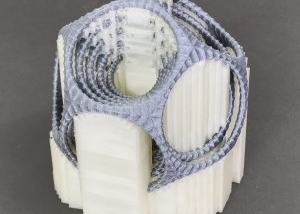
PVA Filament
Polyvinyl acetate (PVA) is commonly known for its ability to be dissolved in water and is often used as a support material for complex prints
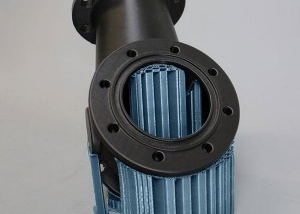
HIPS Filament
High Impact Polystyrene (HIPS) is a lightweight material most commonly used as a dissolvable support structure for ABS models.
Infused filaments
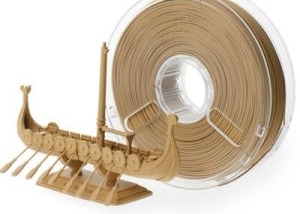
Wood infused
Wood infused combine a PLA base material with cork, wood dust, or other derivatives, giving the models a real wooden look and feel.

Metal infused
Metal infused filaments are made by mixing a fine metal powder into a base material, providing a unique metallic finish and added weight.
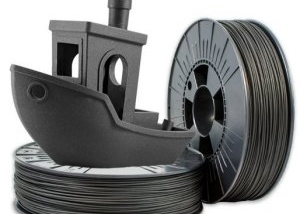
Carbon fibre infused
Carbon fibre infused filaments contain short fibres that are infused into a PLA or ABS base material to help increase strength and stiffness.